French Onion Sourdough Bread
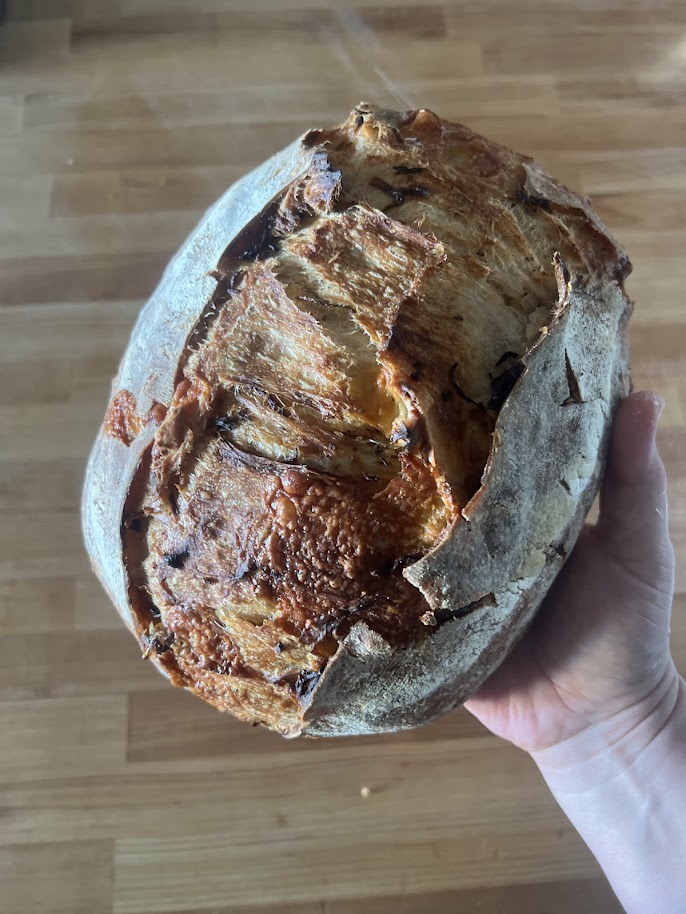
French onion soup meets sourdough bread — deeply caramelized sweet onions, aged Gruyère, and fresh thyme folded into a crusty loaf.
Why I Like This Recipe
Two things I love, french onion soup and sourdough bread, combined into one of the best smelling (and tasting) breads I have ever made. Caramelized onions, funky aged Gruyère, and fresh thyme.
Ingredients
Before You Begin
Caramelize your onions ahead of time — low and slow takes a while. You only need one medium onion (75g caramelized) for this loaf, but I like to make 3–4 times that amount and keep the extra in the fridge, because caramelized onions are delicious on almost anything. Use them as soon as they cool, or store them in the fridge if you don't plan on baking that day.
Instructions
- Mix the water, starter, flours, and salt. Give the dough 5–8 minutes of slap and folds, or use a stand mixer. Bread with inclusions benefits from extra gluten development to hold up to the added ingredients. Once the dough comes together and feels more extensible, cover and let it rest for 30 minutes.
- Add the onions, cheese, and thyme to the top of the dough and perform a stretch and fold. Don't worry if the ingredients seem clumped together — they'll disperse as you continue folding.
- Over the next 2 hours, fold the dough 3 more times, for a total of 4 folds. I like to do coil folds at this point. If the dough is fighting you, gently pick it up and stretch it out without tearing it.
- Let the dough bulk ferment until it's visibly larger, with a couple of bubbles on the surface, a domed shape, and a light jiggle when you move the bowl. When I mixed my dough, it was 78°F when I finished mixing and my room temperature was 70°F — it took 8 hours to finish bulk fermenting. Timing will vary depending on your environment. Watch your dough, trust your instincts, and don't watch the clock!
- Once the dough is fully fermented, shape it and place it in the fridge in a banneton, bread basket, or a floured kitchen bowl lined with a kitchen towel so it doesn't stick.
- The next day, preheat a dutch oven to 450°F for 20–30 minutes. Remove the dough from the fridge and score it. I highly recommend you use a bread mat, sling or parchment paper as the cheese can cause the loaf to stick to your pan. Place it in the dutch oven with an ice cube and bake for 20 minutes with the lid on. Remove the lid, reduce the temperature to 425°F, and continue baking for 15–20 minutes depending on how dark you like your crust.
- Let it cool completely — if you can control yourself!! — and enjoy your delicious, oniony, cheesy bread!
This recipe was created in partnership with Peri & Sons Farms.
There’s nothing like a piping hot bowl of caramelized onions brought together with melty cheese and crusty bread. But we’re heading into summer where most of us won’t be making soup. I wanted to combine two things I love, french onion soup and sourdough bread, to make one of the best smelling (and tasting) breads I’ve ever made!
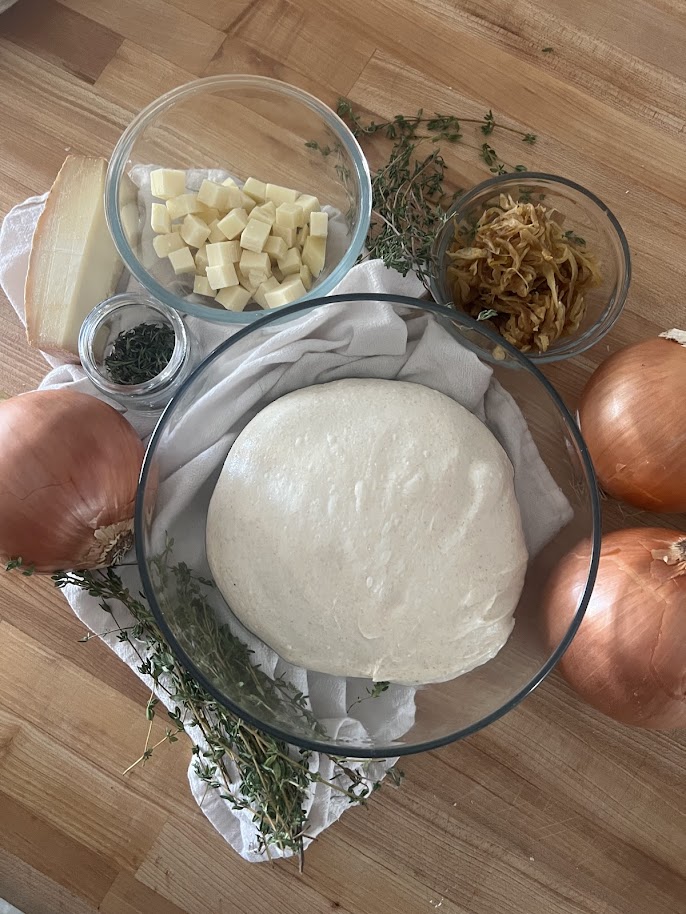
I started by caramelizing sweet onions from Peri and Sons. Low and slow is the way to go with caramelizing onions — slice them thin and use a bit of oil and a bit of butter. Let them cook slowly over low-medium heat, making sure they don’t sit too long without stirring. They start off by sweating and turning translucent, then slowly begin to brown. I added a small pinch of salt, but don’t add too much at this point — the cheese and bread dough also have salt in them. Once the onions are a deep, dark color and very soft, your mouth will be watering and they’re ready! Store them in the fridge if you don’t plan on baking that day, or use them as soon as they cool. I needed one medium sized onion for this loaf, but I like to make 3-4 times that amount when caramelizing onions because it takes a long time and caramelized onions are delicious on almost anything, so having them in the fridge is nice.
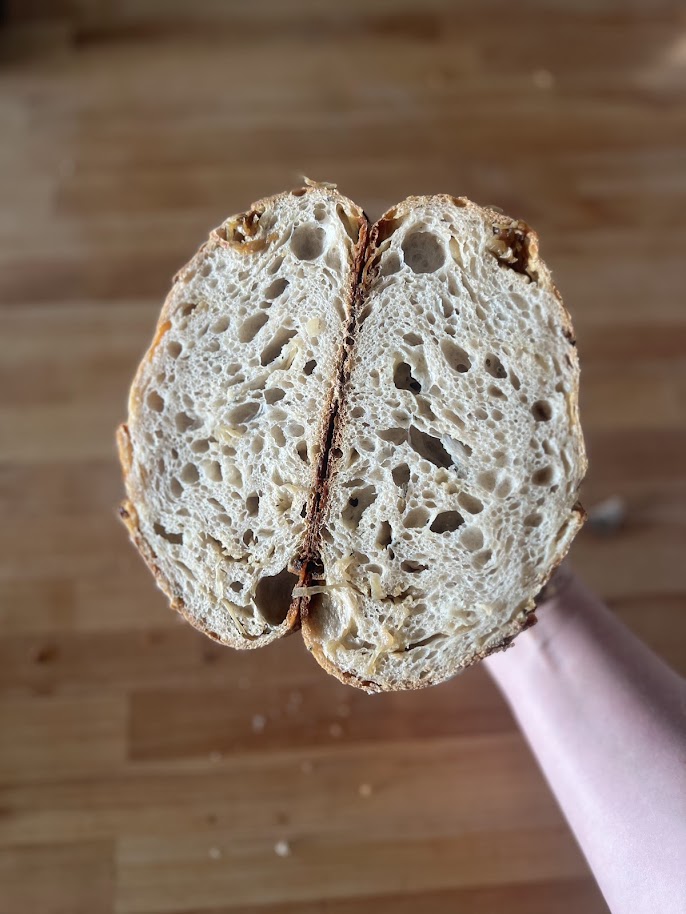
I tried several types of cheese and landed on aged Gruyère. It was the one that most mimicked the flavor of french onion soup — a little funky, nice and salty. Other options I liked but didn’t make the final cut are asiago, aged gouda, and white cheddar. Feel free to try those if you prefer! I like to cut it into small cubes, but you can also grate the cheese if you’d prefer a less direct cheese flavor and want to reduce the chance of holes from the cheese steaming. Just don’t cut it into large cubes — shaping becomes unwieldy and your final loaf will have huge holes where the cheese melts and steams away.
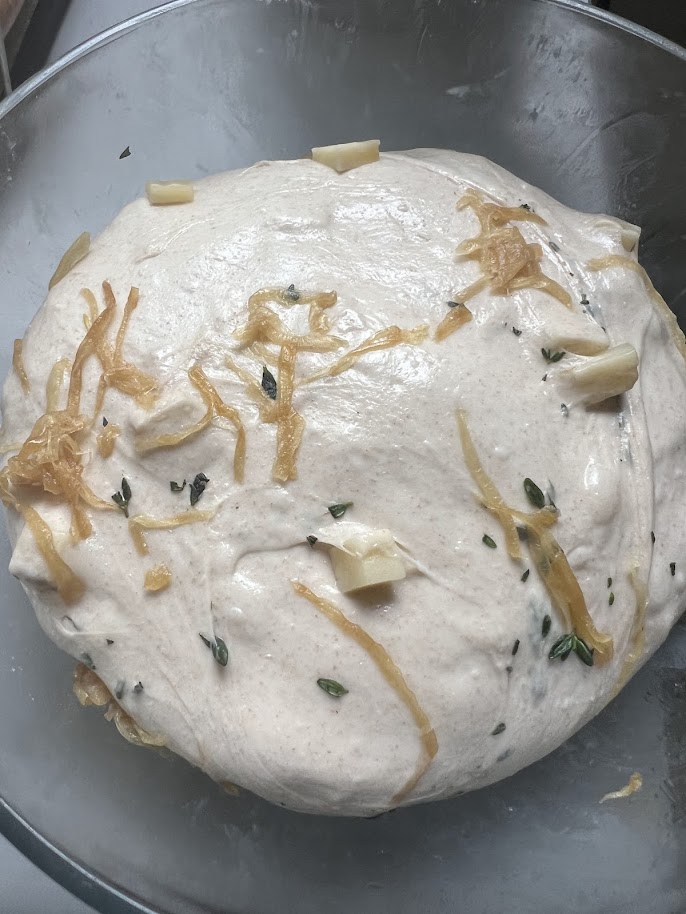
The last inclusion I love in this recipe is fresh thyme. It really takes the bread from good to “oh wow!” And reinforces the savory note on your palate. Without it, the loaf got surprisingly sweet! You can absolutely omit it if you don’t love the flavor, or just add less. Let’s get into it!
Laila's Tools
More Like This
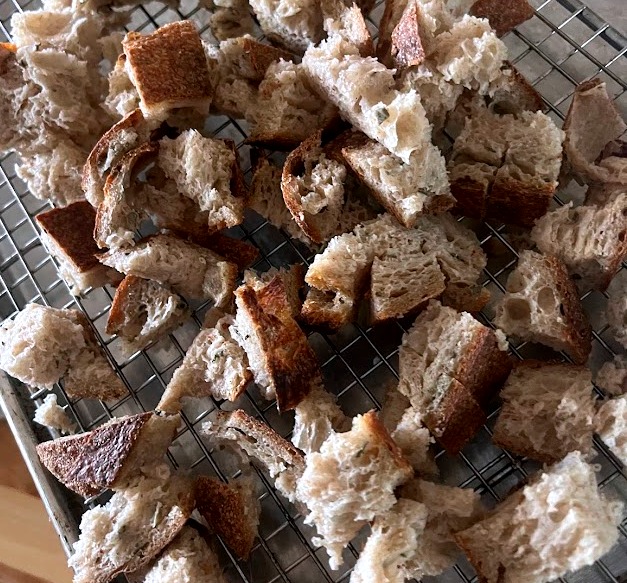
Herb-Loaded Sourdough for Stuffing
A rustic sourdough loaf loaded with thyme, rosemary, and sage — designed to be cubed and dried for the best Thanksgiving stuffing you've ever made. Includes Laila's own stuffing recipe as a bonus.
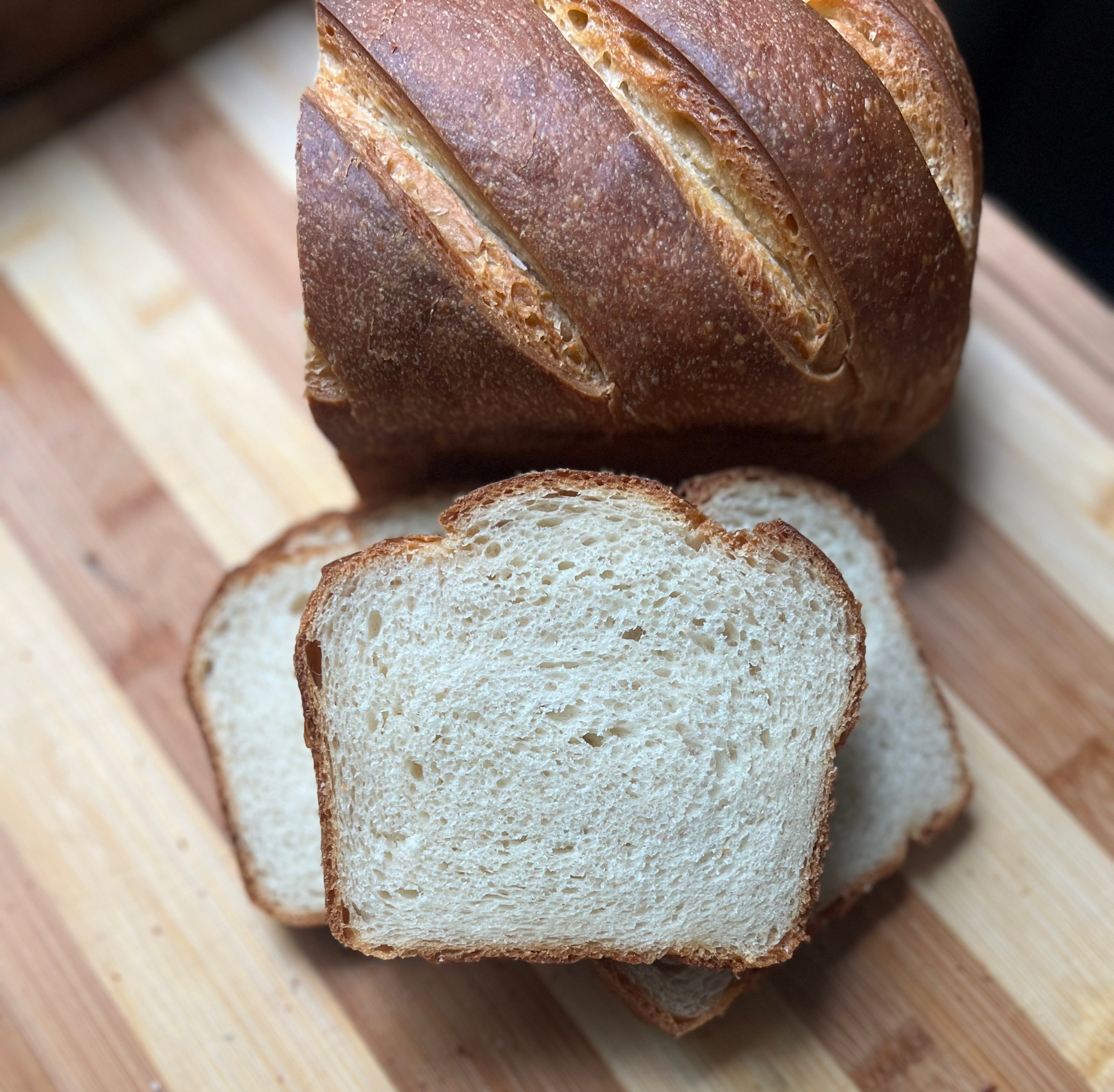
Diner Toast Sourdough
A nostalgic recipe inspired by late-night diner sourdough toast. Milk, honey, and olive oil create a crust that's crispy but soft — like a perfect pie crust. It stays tender and never cuts up the top of your mouth. Perfect for toasting, sandwiches, or just slathered with butter.
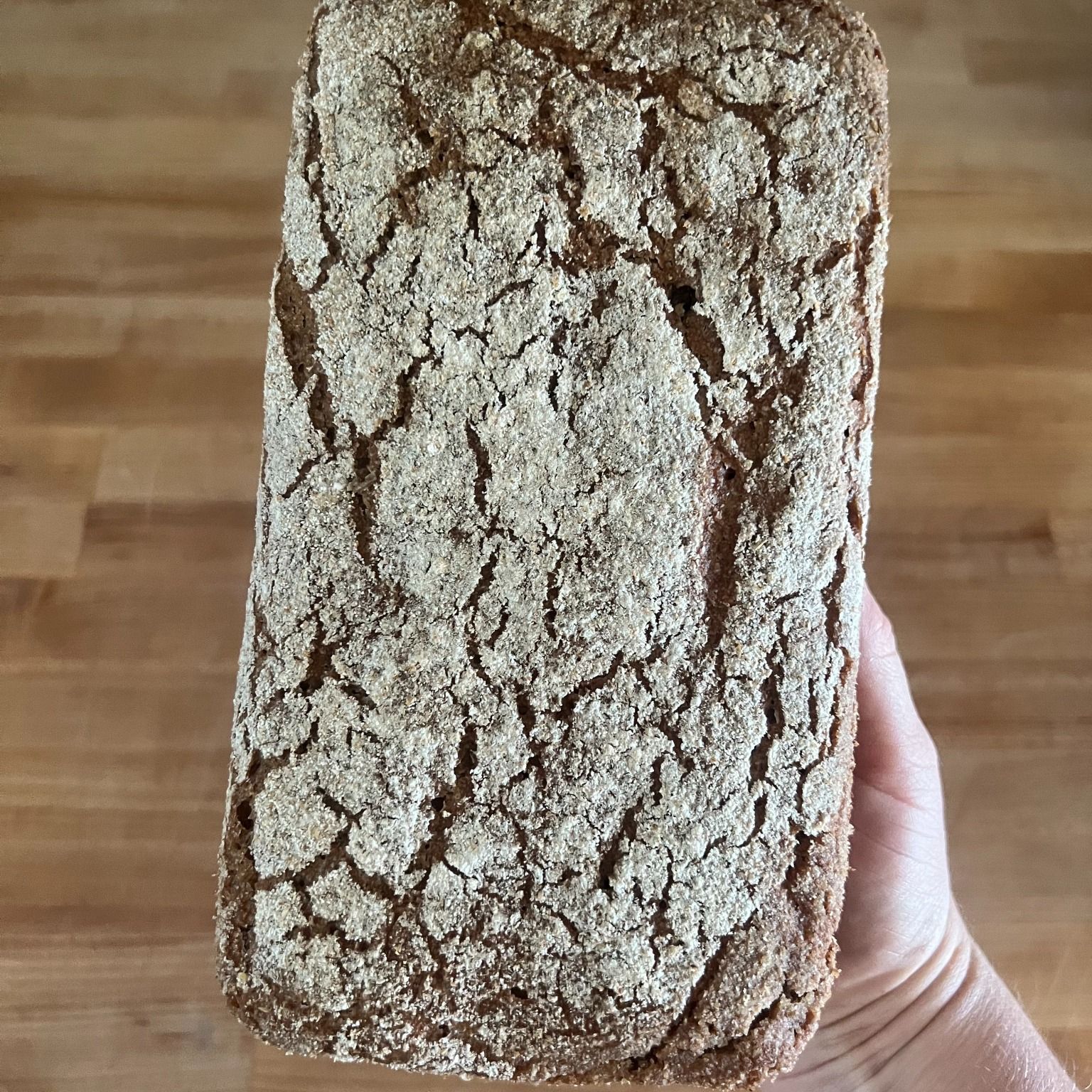
German Style Rye
This bread is everywhere in Germany, Austria (where I was born!) and Switzerland but here in the US we’ve lost our love of dark, dense breads. It has savory spices- fennel, coriander and caraway- and it’s made with primarily whole grains. It has a deep earthy flavor and will last on your counter for over a week. Slice it thin and top it with your favorite toppings!
My Rating
Made this recipe? Tap a star to rate it.
Comments